Buying Guide for the Best Wire Tracers
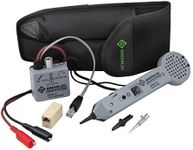
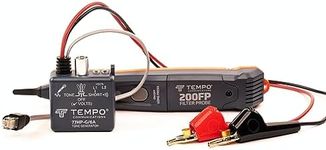
Choosing the right wire tracer is all about understanding your needs and the environment in which you'll be using it. Wire tracers are essential tools for locating and identifying wires or cables hidden in walls, underground, or within complex systems. Before making a decision, think about the types of wires you'll be tracing, the typical environments (indoor, outdoor, residential, industrial), and how often you'll use the tool. A good wire tracer should make your job easier, more accurate, and safer.Tracing RangeTracing range refers to the maximum distance over which the wire tracer can accurately detect and follow a wire or cable. This is important because it determines how far you can trace a wire without losing the signal. Short-range tracers are suitable for small residential jobs or short cable runs, while long-range tracers are better for commercial or industrial settings with extensive wiring. To pick the right range, consider the typical length of wire runs you'll be working with—choose a tracer with a range that comfortably covers your largest expected job.
Signal Strength and AdjustabilitySignal strength is the power of the signal sent through the wire, which the receiver then detects. Adjustable signal strength allows you to increase or decrease the signal depending on the environment and the type of wire. Stronger signals help in noisy or complex environments, while lower signals are better for sensitive electronics or short distances. If you work in varied settings, look for a tracer with adjustable signal strength so you can tailor it to each job.
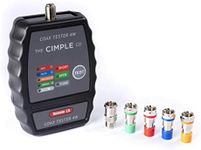
Wire CompatibilityWire compatibility means the types of wires or cables the tracer can work with, such as electrical wires, telephone lines, coaxial cables, or network cables. Some tracers are designed for specific wire types, while others are more versatile. It's important to match the tracer to the kinds of wires you most often encounter. If you work with a variety of cables, choose a model that supports multiple types to ensure flexibility.
Depth DetectionDepth detection is the ability of the tracer to estimate how deep a wire is located, which is especially useful for underground or in-wall cables. This feature helps you avoid unnecessary digging or wall damage. Depth detection capabilities vary—some tracers provide rough estimates, while others offer more precise readings. If you frequently need to locate wires behind walls or underground, prioritize a tracer with reliable depth detection.
Ease of Use and DisplayEase of use covers how simple the tracer is to operate, including the clarity of its display and controls. A clear display helps you quickly interpret results, while intuitive controls make the tool accessible even for beginners. If you're new to wire tracing or need to work quickly, look for a tracer with straightforward operation and a readable display, such as one with clear indicators or digital readouts.
Safety FeaturesSafety features protect both the user and the device, especially when working with live wires. Some tracers can safely handle live circuits, while others require the power to be off. Features like overload protection or voltage detection add an extra layer of safety. If you often work in environments where wires may be live, choose a tracer with robust safety features to minimize risk.