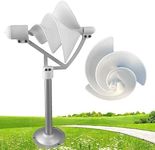
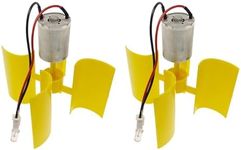
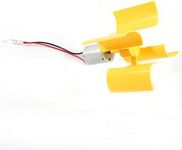
Buying Guide for the Best Wind Generator Kit
Choosing a wind generator kit can be a great way to harness renewable energy for your home, cabin, or off-grid setup. The right kit for you depends on your energy needs, local wind conditions, and how you plan to use the generated power. It's important to understand the main features and specifications so you can match a kit to your situation and get the most reliable and efficient performance.Rated Power OutputRated power output tells you how much electricity the wind generator can produce under ideal wind conditions, usually measured in watts (W) or kilowatts (kW). This is important because it determines how much energy you can expect to generate and whether it will meet your needs. Small kits might be rated at a few hundred watts, suitable for charging batteries or running small devices, while larger kits can produce several kilowatts, enough for household use. To pick the right one, estimate your daily energy usage and consider the average wind speed in your area—higher power output is better for larger energy needs or lower wind areas, while smaller kits are fine for light use or high-wind locations.
Cut-in Wind SpeedCut-in wind speed is the minimum wind speed at which the generator starts producing power, usually measured in meters per second (m/s) or miles per hour (mph). This is important because if your local wind speeds are often below this value, the generator won't produce much energy. Cut-in speeds typically range from 2 to 4 m/s. If you live in an area with gentle breezes, look for a kit with a lower cut-in speed so you can generate power more often. In windier areas, this spec is less critical.
Rotor DiameterRotor diameter refers to the width of the circle made by the spinning blades. A larger rotor can capture more wind and generate more power, but it also requires more space and may be heavier or harder to install. Rotor diameters can range from under a meter for small kits to several meters for larger systems. If you have limited space or want a discreet setup, a smaller rotor is better, but for maximum power in open areas, a larger rotor is more effective.
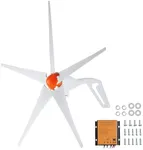
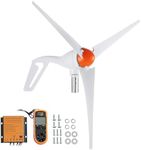
Number of BladesThe number of blades affects how the wind generator performs. Most kits have between two and five blades. Fewer blades can spin faster and are often quieter, while more blades can start turning at lower wind speeds and may be more efficient at capturing energy in gentle winds. If you want a quieter, faster-spinning generator, choose fewer blades; if you need better performance in low wind, more blades may be better.
Voltage OutputVoltage output is the electrical voltage the generator produces, commonly 12V, 24V, or 48V. This is important because it needs to match your battery bank or the devices you plan to power. Lower voltages are typical for small setups and easy to work with, while higher voltages are better for larger systems and reduce energy loss over long cables. Choose the voltage that matches your existing system or the one that best fits your planned use.
Controller and Inverter CompatibilityMany wind generator kits include or require a charge controller and sometimes an inverter. The controller protects your batteries from overcharging, and the inverter converts the generated power to usable AC electricity. It's important to check if the kit includes these components or if you need to buy them separately, and whether they are compatible with your system. If you want a simple, plug-and-play setup, look for kits with included and matched controllers and inverters.
Mounting and Installation RequirementsMounting and installation requirements refer to how and where you can set up the wind generator. Some kits are designed for rooftop or pole mounting, while others need a dedicated tower. Consider the space you have, the height you can safely install the generator, and whether you can handle the installation yourself or need professional help. If you want an easy setup, look for kits with simple mounting options and clear instructions.
Durability and Weather ResistanceDurability and weather resistance describe how well the wind generator can withstand harsh weather, such as rain, snow, or strong winds. Look for materials like corrosion-resistant metals and UV-stable plastics. This is especially important if you live in a coastal or storm-prone area. If your location has tough weather, prioritize kits with strong, weatherproof construction for long-term reliability.