Buying Guide for the Best Tarp Pole
Choosing the right tarp pole is essential for anyone who enjoys camping, hiking, or spending time outdoors. Tarp poles are used to support tarps, creating shelters that protect you from sun, rain, and wind. The right pole can make your shelter more stable, easier to set up, and more comfortable. When picking a tarp pole, it's important to consider how you'll use it, the conditions you'll face, and how much weight and space you can carry. Understanding the key features will help you find a pole that matches your needs and makes your outdoor experience better.MaterialThe material of a tarp pole affects its strength, weight, and durability. Common materials include aluminum, steel, and fiberglass. Aluminum poles are lightweight and resistant to rust, making them great for backpackers or anyone who wants to keep their gear light. Steel poles are heavier but very strong and durable, suitable for car camping or situations where weight is less of a concern. Fiberglass poles are usually lighter than steel but can be less durable. To choose the right material, think about how much weight you want to carry and how tough your shelter needs to be.
LengthThe length of a tarp pole determines how high your shelter will be. Poles come in fixed or adjustable lengths. Shorter poles (under 5 feet) are good for low shelters that block wind or rain, while longer poles (over 6 feet) create more headroom and space under the tarp. Adjustable poles let you change the height depending on your needs. Consider what kind of shelter you want to build and how much space you need underneath when choosing the length.
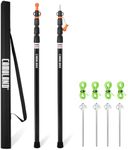
AdjustabilityAdjustability refers to whether the pole can be made longer or shorter. Adjustable poles are versatile and can be used for different tarp setups or uneven ground. Fixed-length poles are simpler and sometimes stronger, but less flexible. If you plan to use your tarp in different ways or on various terrains, adjustable poles are a good choice. If you always set up the same shelter, a fixed pole might be enough.
WeightThe weight of a tarp pole is important, especially if you need to carry it over long distances. Lightweight poles are easier to pack and carry, making them ideal for backpackers. Heavier poles are usually stronger and more stable, which can be better for car camping or base camps. Think about how far you'll carry your gear and how much weight you can handle when picking the right pole.
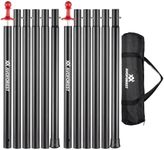
PackabilityPackability is about how small the pole can be when not in use. Some poles break down into short sections, making them easy to fit in a backpack. Others are longer and may only fit in a car or large bag. If you need to save space or carry your pole in a backpack, look for one that packs down small. If space is not an issue, packability may be less important.
Tip DesignThe tip of the tarp pole is the part that touches the tarp or the ground. Some tips are pointed to fit into grommets or eyelets, while others are rounded or have caps to prevent tearing the tarp. The right tip design helps keep your tarp secure and prevents damage. If your tarp has grommets, a pointed tip is useful. If not, a rounded or capped tip can help protect the fabric.
StrengthStrength refers to how much weight or force the pole can handle without bending or breaking. Stronger poles are better for heavy tarps, windy conditions, or when you need extra stability. Lighter poles may not be as strong but are easier to carry. Consider the weather and the size of your tarp when thinking about strength. If you expect strong winds or heavy rain, choose a stronger pole.