Buying Guide for the Best Table Saw
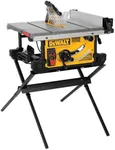
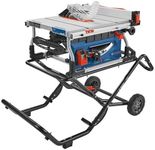
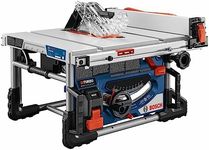
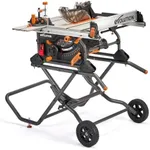
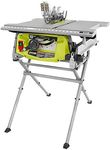
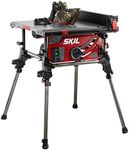
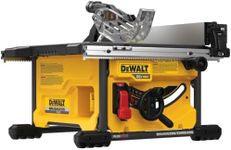
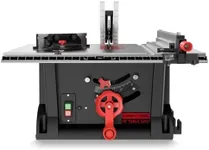
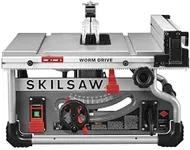
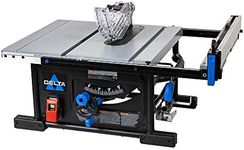
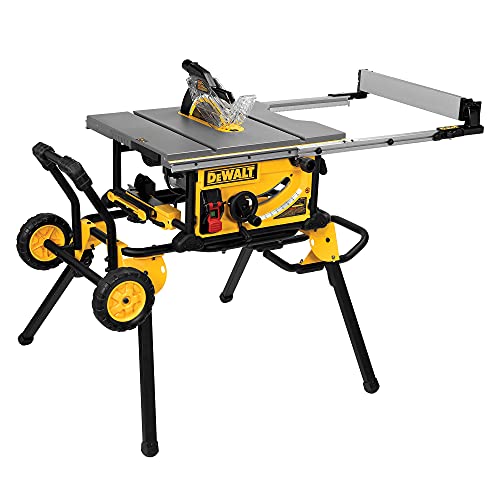
Choosing the right table saw can make a big difference in your woodworking projects, whether you're a hobbyist or a professional. The key is to match the saw's features and capabilities to the type of work you plan to do. Think about the size of materials you'll be cutting, how often you'll use the saw, and where you'll be using it. Understanding the main specifications will help you make a confident and informed decision.Type of Table SawTable saws come in several types, such as benchtop, contractor, hybrid, and cabinet saws. This spec refers to the overall design and intended use of the saw. Benchtop saws are lightweight and portable, ideal for small jobs or limited space. Contractor saws are heavier and more powerful, suitable for larger projects and semi-permanent setups. Hybrid saws blend features of contractor and cabinet saws, offering a balance of power and portability. Cabinet saws are the most robust, designed for heavy-duty, professional use. To pick the right type, consider how much you’ll move the saw, the size of your workspace, and the scale of your projects.
Motor PowerMotor power, usually measured in horsepower (HP) or amps, determines how easily the saw can cut through different materials. Lower-powered motors (around 1-1.5 HP or 10-15 amps) are fine for light-duty tasks and thinner wood, while higher-powered motors (2 HP and above) handle thicker, harder materials and more frequent use. If you plan to cut hardwoods or large sheets regularly, a more powerful motor is better. For occasional or light work, a lower-powered motor will suffice and may be easier to manage.
Rip CapacityRip capacity is the maximum width of material that can be cut to the right of the blade. This is important if you plan to cut large panels or wide boards. Smaller saws may have a rip capacity of 18-24 inches, suitable for most home projects. Larger saws can offer 30 inches or more, which is helpful for cabinetry or furniture making. Choose a rip capacity that matches the largest material you expect to work with.
Table SizeThe table size refers to the surface area where you place your material. A larger table provides better support for big or long pieces, reducing the risk of mistakes or accidents. Compact saws have smaller tables, which are easier to store but less stable for large workpieces. If you often work with big sheets or long boards, a larger table is beneficial. For smaller projects or limited space, a compact table may be more practical.
Fence SystemThe fence is the guide that keeps your cuts straight and accurate. A good fence system is easy to adjust, locks securely, and stays parallel to the blade. Basic fences may be less precise and harder to adjust, while premium fences offer smooth movement and reliable accuracy. If you value precision and plan to do detailed work, invest in a saw with a high-quality fence. For rougher or occasional cuts, a simpler fence may be sufficient.
Safety FeaturesSafety features include blade guards, riving knives, anti-kickback pawls, and emergency shut-off switches. These help prevent accidents and injuries. Some saws also offer advanced safety systems that stop the blade quickly if contact with skin is detected. If you’re new to table saws or prioritize safety, look for models with comprehensive safety features. More experienced users may still benefit from these, especially in busy or shared workspaces.
Dust CollectionDust collection refers to the saw’s ability to manage and remove sawdust during operation. Good dust collection keeps your workspace cleaner and improves air quality. Basic saws may have a simple port for attaching a vacuum, while advanced models offer more efficient dust extraction systems. If you work indoors or want to minimize cleanup, prioritize a saw with effective dust collection. For outdoor or occasional use, this may be less critical.