Buying Guide for the Best Soil Thermometer
Choosing the right soil thermometer is important for anyone interested in gardening, farming, or even scientific experiments. A soil thermometer helps you measure the temperature of the soil, which is crucial for seed germination, plant growth, and understanding soil health. When picking a soil thermometer, you should focus on a few key features that will help you get accurate and reliable readings for your specific needs.Temperature RangeThe temperature range tells you the minimum and maximum temperatures the thermometer can measure. This is important because different plants and activities require you to monitor different temperature levels. For example, seeds often need soil temperatures between 10°C and 30°C to germinate, but composting might require higher ranges. Thermometers with a narrow range (like 0°C to 50°C) are good for general gardening, while wider ranges (like -20°C to 100°C) are better if you need to monitor extreme conditions. Think about what you’ll be measuring most often and choose a thermometer that covers those temperatures.
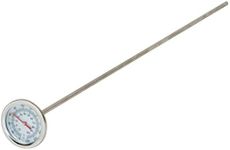
Probe LengthProbe length refers to how long the metal part of the thermometer is that you insert into the soil. This matters because different plants have roots at different depths, and you may want to measure temperature at the surface or deeper down. Short probes (around 4-6 inches) are fine for seed starting and shallow beds, while longer probes (8-12 inches or more) are better for deeper garden beds or compost piles. Consider the depth of soil you want to measure and pick a probe length that matches your needs.
AccuracyAccuracy tells you how close the thermometer’s reading is to the actual soil temperature. This is important because even a small error can affect seed germination or plant health. Most soil thermometers are accurate within 1-2 degrees, which is usually enough for gardening. If you need very precise measurements, such as for scientific experiments, look for thermometers with higher accuracy. For most home gardeners, standard accuracy is sufficient.
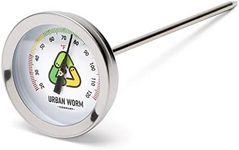
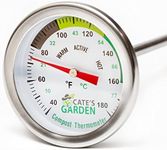
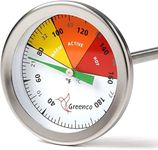
ReadabilityReadability is about how easy it is to see and understand the temperature reading. Some thermometers have large, clear dials or digital displays, while others have small or hard-to-read markings. If you have trouble seeing small numbers or will be using the thermometer in bright sunlight, look for one with a large, high-contrast display. Easy-to-read thermometers make checking soil temperature quick and stress-free.
Durability and MaterialDurability refers to how well the thermometer can withstand being used in soil, which can be moist, hard, or even rocky. Most soil thermometers are made from stainless steel or other rust-resistant materials. This is important because you want a thermometer that won’t break or corrode after repeated use. If you plan to use it often or in tough conditions, choose one made from sturdy, weather-resistant materials.
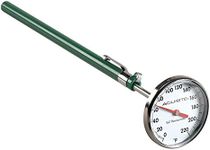
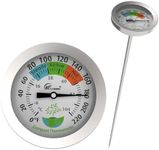
Type (Analog vs. Digital)Soil thermometers come in analog (dial) and digital types. Analog thermometers are simple, don’t need batteries, and are usually very durable. Digital thermometers can be easier to read and may offer extra features like memory or faster readings, but they require batteries and can be more delicate. Think about whether you prefer simplicity and reliability (analog) or convenience and extra features (digital) when making your choice.