Buying Guide for the Best Rifle Rest For Tripod
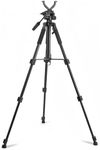
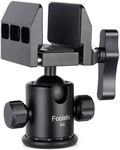
Choosing a rifle rest for a tripod is all about finding the right balance between stability, portability, and adjustability for your shooting needs. A good rifle rest can make a big difference in your accuracy and comfort, whether you're at the range, hunting, or shooting in the field. It's important to think about how and where you'll use the rest, as well as what kind of rifle you have, to make sure you get a product that fits your style and needs.Mounting CompatibilityMounting compatibility refers to how the rifle rest attaches to your tripod. This is important because not all rests fit every tripod, and you want a secure, stable connection. Most commonly, rests use either a standard thread size (like 1/4"-20 or 3/8"-16) or an Arca-Swiss plate system. If you already have a tripod, check what kind of mounting system it uses. If you’re starting from scratch, look for a rest that matches the most common standards, so you have more flexibility in the future.
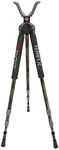
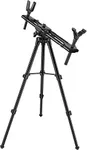
Rest Type (Clamp vs. Saddle vs. Yoke)The rest type describes how your rifle is supported. Clamps hold the rifle firmly in place, saddles cradle the rifle without locking it down, and yokes provide a simple V-shaped support. Clamps offer the most stability for precision shooting but can be slower to adjust. Saddles are a good middle ground, offering support with some freedom of movement. Yokes are lightweight and quick to use but offer less stability. Think about whether you need maximum stability (like for long-range shooting) or quick repositioning (like for hunting).
AdjustabilityAdjustability means how much you can change the position and angle of the rest. This is important for getting comfortable and lining up your shot, especially on uneven ground. Some rests allow for tilt, pan, and height adjustments, while others are more fixed. If you shoot in varied environments or need to track moving targets, more adjustability is helpful. If you mostly shoot from a bench or flat ground, a simpler rest may be enough.
Weight and PortabilityWeight and portability refer to how heavy and easy to carry the rest is. Heavier rests tend to be more stable but can be a hassle to carry long distances. Lightweight rests are easier to pack and move but might not be as steady, especially with heavier rifles. If you plan to hike or move around a lot, look for a lighter, more compact rest. If you’ll mostly shoot from a fixed spot, a heavier rest can give you more stability.
Material and Build QualityMaterial and build quality affect how durable and reliable the rest is. Common materials include aluminum, steel, and sometimes reinforced plastics. Metal rests are usually stronger and last longer, but can be heavier. Good build quality means the rest will hold up to repeated use and rough handling. If you shoot often or in tough conditions, prioritize strong materials and solid construction. For occasional or light use, lighter materials may be fine.
Rifle Fit and ProtectionRifle fit and protection refer to how well the rest accommodates different rifle sizes and how it protects your rifle’s finish. Some rests have adjustable width or padding to fit various stocks and prevent scratches. If you use different rifles or care about keeping your rifle in top shape, look for a rest with adjustable, padded contact points. If you always use the same rifle and don’t mind a few marks, this may be less important.