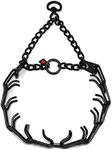
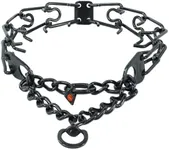
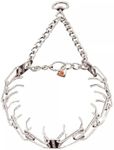
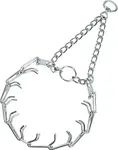
Buying Guide for the Best Prong Collar For Dogs
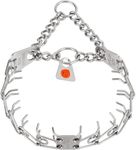
Choosing the right prong collar for your dog is an important decision that can impact both training effectiveness and your pet’s comfort. Prong collars, also known as pinch collars, are designed to provide gentle pressure around a dog’s neck to discourage pulling during walks. However, they must be used responsibly and fitted correctly to avoid causing harm. When selecting a prong collar, it’s essential to consider your dog’s size, temperament, and training needs. Always consult with a professional trainer or veterinarian before using a prong collar, especially if you are new to this type of training tool.Material QualityMaterial quality refers to what the prong collar is made from, such as stainless steel, chrome-plated steel, or plastic. This is important because a high-quality material ensures durability, rust resistance, and safety for your dog. Stainless steel is generally the most reliable and long-lasting, while chrome-plated options are more affordable but may wear out faster. Plastic prongs are less harsh but may not be as effective for strong pullers. Choose a material that matches your dog’s strength and your local climate (for example, stainless steel for wet environments).
Prong Size and ThicknessProng size and thickness refer to the length and width of the individual prongs on the collar. Thicker, longer prongs distribute pressure more evenly and are generally better for larger or stronger dogs, while thinner, shorter prongs are suitable for smaller or more sensitive dogs. If your dog is new to prong collars or has a sensitive neck, opt for shorter, rounded prongs to minimize discomfort. Always ensure the prongs are smooth and not sharp to prevent injury.
Collar Length and AdjustabilityCollar length and adjustability determine how well the collar fits your dog’s neck. A proper fit is crucial for both safety and effectiveness. Most prong collars can be adjusted by adding or removing links. The collar should sit high on your dog’s neck, just behind the ears, and fit snugly without being too tight or too loose. Measure your dog’s neck and check the collar’s adjustability range to ensure a secure and comfortable fit.
Closure MechanismThe closure mechanism is how the collar opens and closes, such as quick-release buckles or traditional link closures. Quick-release buckles make it easier to put the collar on and take it off, which is helpful for dogs that are wiggly or anxious. Traditional link closures are more secure but can be harder to manage. Choose a closure that matches your handling comfort and your dog’s behavior during collaring.
Safety FeaturesSafety features include rounded prong tips, protective rubber caps, and built-in limiters that prevent the collar from tightening too much. These features are important to prevent accidental injury and ensure humane use. If you are concerned about your dog’s comfort or are new to prong collars, look for models with extra safety features to provide peace of mind during training.