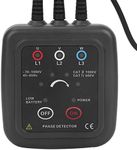
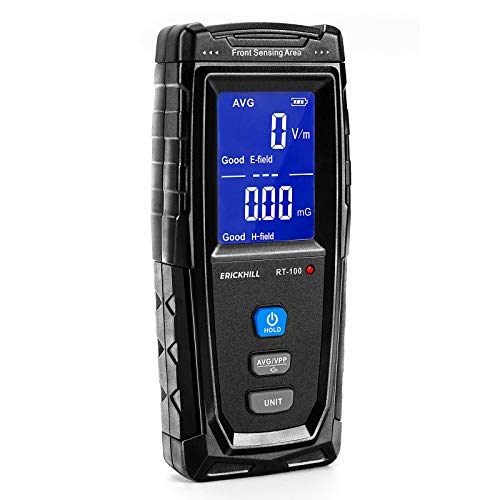
Buying Guide for the Best Phase Rotation Meter
Choosing a phase rotation meter is all about understanding your needs for electrical testing, especially if you work with three-phase systems. These meters help you determine the sequence of phases, which is crucial for ensuring motors and other equipment run in the correct direction. When picking the right phase rotation meter, focus on the features that match your work environment and the types of systems you’ll be testing. Think about how often you’ll use it, the environments you’ll be working in, and the level of accuracy you require.Voltage RangeThe voltage range tells you what levels of voltage the meter can safely and accurately measure. This is important because using a meter outside its rated range can give incorrect readings or even damage the device. Voltage ranges are usually divided into low (up to 400V), medium (up to 600V), and high (above 600V). If you mostly work with standard commercial or residential systems, a lower range is usually enough. For industrial settings, you might need a meter that can handle higher voltages.
Phase Indication TypeThis refers to how the meter shows you the phase sequence—either through lights, a digital display, or a rotating disk. Simple light indicators are easy to use and quick to read, while digital displays can provide more detailed information. Rotating disks are more traditional and may be preferred in some settings. If you want fast, clear results, digital or light indicators are best. If you’re used to older equipment, a rotating disk might feel more familiar.
Connection MethodPhase rotation meters can connect to circuits using test leads with clips or probes, or sometimes wirelessly. Clip leads are secure and good for hands-free operation, while probes are more flexible for tight spaces. Wireless options are rare but can be useful for hard-to-reach areas. Choose the connection method that matches the types of panels and equipment you’ll be testing most often.
Safety RatingsSafety ratings, often shown as CAT (category) levels, indicate how well the meter is protected against electrical surges and faults. Higher CAT ratings (like CAT III or CAT IV) mean the meter is safer for use in more demanding environments, such as industrial or utility settings. If you’re working in high-energy environments, always choose a meter with a higher safety rating to protect yourself and your equipment.
Size and PortabilityThe size and weight of the meter affect how easy it is to carry and use, especially if you move between job sites. Compact meters are easier to transport and use in tight spaces, while larger meters may offer more features or durability. If you’re often on the go, a smaller, lighter meter is usually more convenient.
Additional FeaturesSome phase rotation meters offer extra features like non-contact voltage detection, backlit displays, or the ability to test both phase rotation and motor rotation. These can make your work easier and safer, but may not be necessary for everyone. Think about which features would actually help you in your daily tasks and choose accordingly.