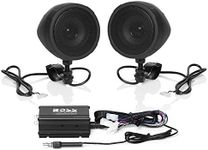
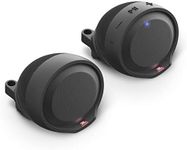
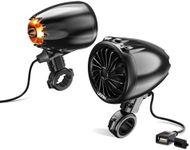
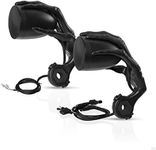
Buying Guide for the Best Motorcycle Handlebar Speakers
Choosing the right motorcycle handlebar speakers can make your rides much more enjoyable by letting you listen to music, podcasts, or navigation instructions clearly, even at high speeds. Since motorcycles are exposed to the elements and have unique noise challenges, it's important to focus on features that ensure durability, sound quality, and ease of use. Think about where and how you ride, what kind of music you enjoy, and how much control you want over your audio experience. By understanding the key specifications, you can find speakers that fit your needs and make your rides more fun and comfortable.Power Output (Wattage)Power output, measured in watts, tells you how loud and clear the speakers can get. Higher wattage generally means the speakers can play music at higher volumes without distortion, which is important on a motorcycle where wind and engine noise can be loud. Speakers with lower wattage (under 20W) are suitable for quiet rides or city use, while mid-range (20-50W) works well for most riders. High wattage (over 50W) is best for highway riding or if you want your music to be heard clearly at high speeds. Choose based on how and where you ride most often.
Weather Resistance (Waterproof/Weatherproof Rating)Weather resistance indicates how well the speakers can handle rain, dust, and other outdoor conditions. Look for terms like 'waterproof' or 'weatherproof,' and check for ratings like IPX4, IPX5, or higher. Lower ratings mean the speakers can handle light splashes, while higher ratings mean they can survive heavy rain or even brief submersion. If you ride in all weather conditions, prioritize higher weather resistance. If you only ride in good weather, a basic level may be enough.
Mounting CompatibilityMounting compatibility refers to whether the speakers can be securely attached to your motorcycle’s handlebars. Handlebar diameters can vary, so check the size range the speakers can fit. Some mounts are adjustable, while others are fixed. If you have thicker or uniquely shaped handlebars, make sure the speakers you choose can be mounted safely and won’t interfere with your controls. Always consider ease of installation and whether you want a permanent or removable setup.
Connectivity (Bluetooth, Wired, AUX, USB)Connectivity options determine how you play music through your speakers. Bluetooth allows wireless streaming from your phone or other devices, which is convenient and popular. Wired options like AUX or USB can offer more stable connections and sometimes better sound quality, but require cables. If you want to control music easily and avoid wires, Bluetooth is best. If you prefer a direct connection or want to use older devices, look for AUX or USB options.
Control OptionsControl options refer to how you adjust volume, skip tracks, or answer calls. Some speakers have built-in buttons or dials, while others rely on your phone or a remote control. Built-in controls are handy if you want to make quick adjustments without stopping. If you prefer to keep your hands on the handlebars, look for speakers with easy-to-use, glove-friendly controls or wireless remotes.
Sound Quality (Frequency Response, Speaker Size)Sound quality is influenced by the frequency response (how well the speakers handle bass, mid, and treble) and the size of the speaker drivers. Larger speakers (over 3 inches) usually produce fuller sound and better bass, while smaller ones are more compact but may lack depth. If you care about rich, clear music, look for speakers with a wide frequency range and larger drivers. If you just want basic audio for navigation or casual listening, smaller speakers may be enough.