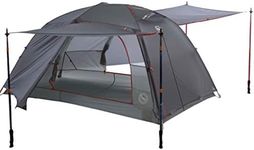
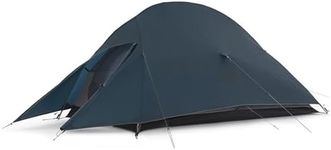
Buying Guide for the Best Motorcycle Camping Tents
Choosing a motorcycle camping tent is all about finding the right balance between portability, protection, and comfort. Since you'll be carrying your tent on your motorcycle, it's important to consider how much space it takes up, how easy it is to set up, and how well it will protect you from the elements. Think about the type of trips you plan to take, the weather conditions you might face, and how much gear you need to store inside the tent. The right tent will make your camping experience much more enjoyable and stress-free.Packed SizePacked size refers to how small the tent becomes when it's folded and stored in its bag. This is important because space on a motorcycle is very limited. Tents with a smaller packed size are easier to fit into saddlebags or attach to your bike. Packed sizes can range from very compact (about the size of a loaf of bread) to larger, bulkier options. If you have limited storage space, look for a tent that packs down as small as possible. If you have more room or are traveling with a passenger, you might be able to handle a slightly larger packed size.
WeightWeight is how heavy the tent is when packed. Since you'll be carrying everything on your motorcycle, a lighter tent is generally better. Lightweight tents are easier to handle and won't add much to your bike's load. Tent weights can range from ultralight (under 2 kg) to heavier options (over 4 kg). If you plan to travel long distances or want to keep your bike agile, go for a lighter tent. If comfort and space are more important and you don't mind a bit of extra weight, a heavier tent might be acceptable.
CapacityCapacity means how many people the tent is designed to sleep. Motorcycle camping tents are usually available in 1-person, 2-person, or 3-person sizes. A 1-person tent is very compact and light, but has limited space for gear. A 2-person tent offers more room for you and your gear, or for a companion. A 3-person tent is roomier but bulkier. Choose a tent size based on whether you camp alone or with someone else, and how much gear you want to keep inside the tent with you.
Weather ResistanceWeather resistance refers to how well the tent protects you from rain, wind, and other elements. This is usually determined by the tent's materials, waterproof coatings, and design features like rainfly coverage and ventilation. Some tents are designed for mild weather, while others can handle heavy rain and strong winds. If you expect to camp in unpredictable or harsh weather, look for a tent with a full-coverage rainfly, strong poles, and good waterproof ratings. For fair-weather camping, a simpler tent may be enough.
Setup EaseSetup ease is about how quickly and simply you can pitch the tent. Some tents use color-coded poles or simple designs that make setup fast, even in the dark or bad weather. Others may be more complicated and take longer to assemble. If you often arrive at camp late or in poor conditions, a tent that's easy to set up will save you time and frustration. If you don't mind spending a bit more time on setup, you might consider tents with more complex designs that offer extra space or features.
Vestibule/Gear StorageA vestibule is an area outside the main sleeping space, usually covered by the rainfly, where you can store boots, helmets, and other gear. This is especially useful for motorcycle campers who need to keep their equipment dry and secure. Some tents have large vestibules or even separate gear garages, while others have little or no extra storage space. If you travel with a lot of gear or want to keep your motorcycle equipment protected, look for a tent with a spacious vestibule.