Buying Guide for the Best Macro Lens For Iphone
Choosing a macro lens for your iPhone can open up a whole new world of close-up photography, letting you capture tiny details that your phone’s regular camera can’t see. The right macro lens will help you take sharp, detailed photos of small subjects like flowers, insects, or textures. When picking a macro lens, it’s important to understand the key features that affect image quality and usability, so you can find one that matches your photography interests and style.MagnificationMagnification tells you how much closer the lens can make small objects appear. It’s usually described as a ratio, like 10x or 15x. A lower magnification (like 5x) is good for capturing slightly larger details, such as the veins in a leaf, while higher magnification (like 15x or 20x) lets you see very fine details, such as the texture of an insect’s eye. If you want to photograph larger subjects or scenes, a lower magnification is easier to use and gives you more of the subject in focus. For extreme close-ups, higher magnification is better, but it can be harder to keep the image sharp and steady. Think about what you want to photograph most often to decide which magnification suits you best.
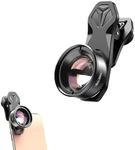
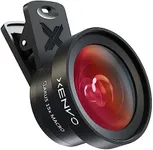
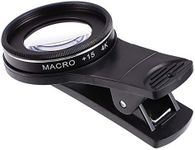
Lens Attachment MethodThis refers to how the macro lens connects to your iPhone. Common methods include clip-on, magnetic, or case-mounted lenses. Clip-on lenses are easy to use and work with most phone models, but they can sometimes shift out of place. Magnetic lenses are quick to attach but may not be as secure. Case-mounted lenses offer the most stability but require a special phone case. If you want something quick and portable, a clip-on or magnetic lens is convenient. If you plan to use the lens often and want the best alignment, a case-mounted option might be better.
Optical QualityOptical quality refers to how well the lens can produce sharp, clear images without distortion or color problems. High-quality lenses use better glass and coatings to reduce blurriness and unwanted color effects. If you care about getting the best possible image, look for lenses that mention multi-element glass or anti-reflective coatings. If you’re just experimenting or sharing photos on social media, a basic lens may be enough, but for serious photography, optical quality becomes more important.
Working DistanceWorking distance is the space between the lens and your subject when the image is in focus. Some macro lenses require you to get very close, almost touching the subject, while others let you stay a bit farther away. A longer working distance is helpful if you want to photograph things that might move, like insects, or if you want to avoid casting shadows on your subject. If you mostly shoot still objects, a shorter working distance is fine, but for live subjects or more flexibility, look for a lens with a longer working distance.
CompatibilityCompatibility means whether the lens will fit your specific iPhone model. Some lenses are designed to work with a wide range of phones, while others are made for certain models or require a special case. Always check that the lens you’re considering will fit your phone, especially if you have a newer or less common model. If you plan to upgrade your phone soon, a more universal lens might be a better choice.
Portability and Build QualityPortability is about how easy it is to carry the lens with you, and build quality refers to how sturdy and durable it feels. Smaller, lightweight lenses are easier to take on the go, but they may be less durable. Heavier lenses often use better materials and last longer, but they can be bulkier. If you want a lens for travel or casual use, choose something compact and light. If you’ll use it often or in rough conditions, look for a lens with a solid build.