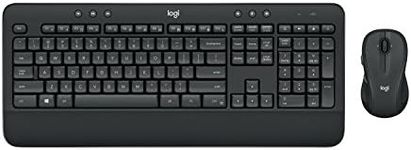
Buying Guide for the Best Long Range Wireless Keyboard And Mouse
Choosing a long-range wireless keyboard and mouse can make your workspace more flexible and comfortable, especially if you want to control your computer from a distance, such as across a room or in a meeting space. The right set will depend on how far you need to be from your device, how you plan to use them, and your preferences for comfort and features. Understanding the key specifications will help you find a set that fits your needs and ensures a reliable, enjoyable experience.Wireless RangeWireless range refers to the maximum distance the keyboard and mouse can be from the receiver or computer while still working reliably. This is important because if you need to control your device from across a large room, a short range will cause lag or disconnections. Ranges are usually divided into short (up to 10 meters), medium (10-20 meters), and long (over 20 meters). If you plan to use the set in a small office or at a desk, a short range is enough. For presentations, home theaters, or large rooms, look for medium or long-range options to ensure smooth operation.
Connection TypeThe connection type describes how the keyboard and mouse communicate with your computer, usually through Bluetooth or a USB wireless receiver (often called a dongle). Bluetooth is convenient if your device supports it and you want to avoid using a USB port, but it can sometimes have more interference. USB receivers often provide a more stable connection and are easier to set up, but they use up a USB port. If you need to switch between devices or want a cleaner setup, Bluetooth might be better. For maximum reliability, especially at longer ranges, a USB receiver is often preferred.
Battery LifeBattery life tells you how long the keyboard and mouse will work before needing new batteries or a recharge. This is important because frequent battery changes can be annoying, especially if you use the set often or at a distance. Some devices use standard batteries, while others have built-in rechargeable batteries. Short battery life means more interruptions, while longer battery life offers more convenience. If you use your keyboard and mouse daily or for long periods, look for models with longer battery life or rechargeable options.
Ergonomics and ComfortErgonomics and comfort refer to how the keyboard and mouse feel in your hands and how easy they are to use for long periods. This is important because uncomfortable devices can cause strain or fatigue. Keyboards and mice come in different shapes and sizes, from compact and flat to full-sized and contoured. If you type a lot or use the mouse for extended periods, look for ergonomic designs that fit your hand size and typing style. If you need portability, a smaller, lighter set might be better, but for home or office use, comfort should be a priority.
CompatibilityCompatibility means whether the keyboard and mouse will work with your computer or device, including the operating system (like Windows, Mac, or Linux) and available ports. This is important because some sets may not support all systems or may require special drivers. Check that the set you choose is compatible with your devices, especially if you use less common systems or want to connect to smart TVs or tablets. If you plan to use the set with multiple devices, look for models that support easy switching between them.
Additional FeaturesAdditional features include things like backlit keys, programmable buttons, touchpads, or media controls. These can make your experience more convenient or enjoyable, depending on your needs. For example, backlit keys are helpful in low-light environments, while extra buttons can speed up tasks. If you have specific needs, like controlling media or using shortcuts, look for sets with these features. If you just need basic typing and pointing, a simpler set may be all you need.