Buying Guide for the Best Ipad Pencil Alternative
Choosing an alternative stylus for your iPad can be a great way to get similar functionality to the Apple Pencil, often at a lower price or with features that better suit your needs. The key is to understand what features matter most for your intended use, whether that's note-taking, drawing, annotating documents, or general navigation. By focusing on the main specifications, you can find a stylus that feels comfortable, works reliably with your iPad, and supports the tasks you care about most.CompatibilityCompatibility refers to whether the stylus works with your specific iPad model. Not all styluses are universally compatible, and some may only work with certain generations or types of iPads. It's important because a stylus that isn't compatible won't function properly, or at all, with your device. To navigate this, check the product details for a list of supported iPad models. If you have a newer iPad, look for styluses that mention support for recent models; if your iPad is older, make sure the stylus specifically lists it. Your need here is simple: always match the stylus to your iPad to ensure full functionality.
Pressure SensitivityPressure sensitivity is the stylus's ability to detect how hard you press on the screen, which is especially important for artists and those who want a natural writing or drawing experience. Higher pressure sensitivity allows for more nuanced lines and shading. Styluses can range from having no pressure sensitivity, to basic levels, to advanced with thousands of pressure points. If you mainly take notes or navigate, pressure sensitivity may not matter much. If you plan to draw or do detailed work, look for a stylus with higher pressure sensitivity.
Palm RejectionPalm rejection is a feature that allows you to rest your hand on the screen while using the stylus without causing unwanted marks or actions. This is important for comfort and accuracy, especially during long writing or drawing sessions. Some styluses offer full palm rejection, while others may have limited or no support. If you plan to write or draw extensively, prioritize a stylus with good palm rejection. For casual use, this feature may be less critical.
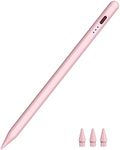
Tip Type and ReplacementThe tip type refers to the material and shape of the stylus tip, which affects how it feels and performs on the screen. Some tips are hard plastic, others are soft or rubbery, and some are fine-point for precision. Replacement tips are important because tips wear out over time. If you want a stylus that feels close to a real pen or pencil, look for a fine-point tip. If you want durability, check if replacement tips are available and easy to swap. Your use case—whether you want precision for drawing or just general use—should guide your choice.
Charging and Battery LifeCharging and battery life refer to how the stylus is powered and how long it lasts between charges. Some styluses use built-in rechargeable batteries, while others use replaceable batteries or don't require power at all. Longer battery life means less frequent charging, which is convenient for heavy users. If you use your stylus often or for long periods, look for one with a long battery life or quick charging. If you only use it occasionally, battery life may be less important.
Shortcut ButtonsShortcut buttons are extra buttons on the stylus that can be programmed for functions like erasing, undoing, or switching tools. This can speed up your workflow, especially for creative tasks. Some styluses have one or more buttons, while others have none. If you want to streamline your work or use your stylus for complex tasks, consider a model with shortcut buttons. For basic note-taking or navigation, this feature may not be necessary.
Weight and ErgonomicsWeight and ergonomics refer to how the stylus feels in your hand—its balance, thickness, and overall comfort. A stylus that's too heavy or too light can cause fatigue or be awkward to use. Some people prefer a thicker stylus for a better grip, while others like a slim, pen-like feel. If you plan to use the stylus for long periods, try to find one that matches your comfort preferences. For occasional use, this may be less of a concern.