Buying Guide for the Best External Drive For Ipad
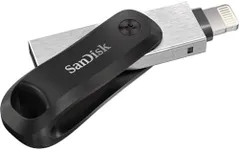
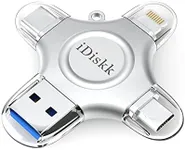
Choosing an external drive for your iPad can help you expand your storage, back up important files, and easily transfer data between devices. Since iPads have limited built-in storage and no way to upgrade it internally, an external drive is a practical solution for storing photos, videos, documents, and more. When picking the right external drive, it's important to consider how you'll use it—whether for media storage, work files, or backups—and make sure it's compatible with your iPad model. Understanding the key specifications will help you find a drive that fits your needs and works smoothly with your device.Connection TypeThe connection type refers to how the external drive physically connects to your iPad. Most modern iPads use either a Lightning port or a USB-C port. It's important because the drive must match your iPad's port to work directly without extra adapters. Drives with USB-C are best for newer iPads, while Lightning-compatible drives suit older models. Some drives come with both connectors or include adapters, which can be handy if you use multiple devices. To pick the right one, check your iPad's port and choose a drive that matches it for the most reliable and convenient connection.
Storage CapacityStorage capacity is the amount of data the drive can hold, measured in gigabytes (GB) or terabytes (TB). This is important because it determines how much content you can store—like photos, videos, and documents. Smaller capacities (like 64GB or 128GB) are good for basic file transfers or occasional backups, while larger capacities (500GB, 1TB, or more) are better for storing lots of media or large files. To choose the right size, think about what you plan to store and how much space you might need in the future. If you work with large video files or want to back up your entire iPad, go for a higher capacity.
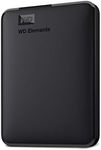
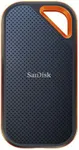
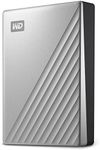
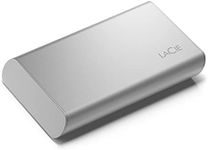
Drive Type (SSD vs HDD)External drives come in two main types: solid-state drives (SSD) and hard disk drives (HDD). SSDs are faster, lighter, and more durable because they have no moving parts, making them ideal for quick file transfers and carrying around. HDDs are usually larger and heavier but offer more storage for the price. If you need speed and portability, an SSD is a better choice. If you mainly need lots of space and don't mind a bit more weight, an HDD can be suitable. Your choice should depend on whether you value speed and durability or just need maximum storage.
Compatibility and File SystemCompatibility means whether the drive will work with your iPad's operating system and apps. The file system is how the drive organizes data, and not all file systems are supported by iPadOS. Drives formatted as exFAT or FAT32 are widely compatible with iPads, while some other formats may not work. Before buying, check if the drive is advertised as 'iPad compatible' or if you can reformat it to a supported file system. If you want to use the drive with both iPads and other devices like Windows PCs or Macs, exFAT is usually the best choice.
Physical Size and PortabilityThe physical size and weight of the drive affect how easy it is to carry with your iPad. Smaller, lighter drives are more portable and fit easily in a bag or pocket, making them great for travel or working on the go. Larger drives may offer more storage but can be less convenient to carry. If you plan to use the drive mostly at home, size may not matter as much. For frequent travelers or students, a compact and lightweight drive is usually the best fit.
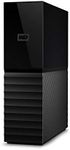
Power RequirementsSome external drives need extra power to work, while others draw power directly from the iPad. Drives that require external power (like some large HDDs) may not work well with iPads unless you use a powered hub. Portable SSDs and smaller drives usually work without extra power. To avoid hassle, look for drives that are 'bus-powered' or specifically designed for mobile devices, so you can use them anywhere without needing to plug into a wall outlet.