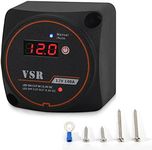
Buying Guide for the Best Dual Battery Isolator Kit
Choosing a dual-battery isolator kit is important if you want to run accessories like fridges, lights, or inverters from a second battery in your vehicle without draining your main starting battery. The isolator kit manages the charging and separation of your batteries, ensuring your vehicle always has enough power to start. When picking the right kit, consider your vehicle type, how much power you need, and what kind of accessories you plan to use. Understanding the key specifications will help you select a kit that matches your needs and keeps your electrical system safe and reliable.Type of IsolatorThe type of isolator refers to the technology used to separate and manage the batteries. The main types are mechanical (solenoid-based) and solid-state (electronic or voltage-sensitive relays). Mechanical isolators are simple and durable, suitable for basic setups, while solid-state isolators offer more precise control and are better for modern vehicles with sensitive electronics. If you have a newer vehicle or want automatic operation, a solid-state or voltage-sensitive isolator is usually best. For older vehicles or simple needs, a mechanical isolator can be sufficient.
Current Rating (Amperage)The current rating tells you how much electrical current the isolator can handle safely, usually measured in amps (A). This is important because it needs to match or exceed the maximum current your alternator and accessories will draw. Isolators typically range from 70A to 200A or more. For small setups with basic accessories, a lower rating may be fine, but for larger systems with high-power devices or big alternators, choose a higher-rated isolator to prevent overheating or failure.
Voltage CompatibilityVoltage compatibility means the isolator is designed for a specific system voltage, most commonly 12V or 24V. Using the wrong voltage can damage your batteries or the isolator. Make sure the kit matches your vehicle’s electrical system. Most cars, SUVs, and light trucks use 12V, while some heavy-duty vehicles use 24V. Always check your vehicle’s system before buying.
Manual vs. Automatic OperationSome isolators require you to manually switch between batteries, while others automatically detect when to connect or disconnect the batteries based on voltage. Automatic isolators are more convenient and protect your batteries without you having to think about it, making them ideal for most users. Manual isolators give you more control but require you to remember to switch them, which can be risky if you forget.
Installation ComplexityInstallation complexity refers to how easy or difficult it is to set up the kit in your vehicle. Some kits are plug-and-play with clear instructions and all necessary parts, while others may require more wiring, mounting, or even professional help. If you’re comfortable with basic vehicle wiring, a simple kit may be fine. If not, look for kits with detailed guides or consider professional installation to ensure safety and reliability.
Additional FeaturesSome isolator kits come with extra features like LED indicators, remote monitoring, or built-in fuses and circuit protection. These features can make it easier to monitor your system and add extra safety. If you want more information about your battery status or extra protection, look for kits with these added features. If you prefer a basic setup, you can skip these extras.