Buying Guide for the Best Dryer Vent Cleaning Kits
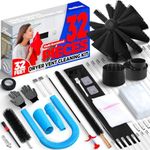
Choosing the right dryer vent cleaning kit is important for keeping your dryer running efficiently and safely. A good kit helps you remove lint and debris from your dryer's vent, which can reduce fire risk and improve drying performance. When shopping for a kit, focus on the features that make cleaning easier and more effective for your specific dryer setup. Think about the length of your vent, the type of vent (rigid or flexible), and how comfortable you are with DIY tasks. Understanding the key specifications will help you pick a kit that matches your needs and ensures your dryer stays in top shape.Rod LengthRod length refers to how long the cleaning rods are when fully assembled. This is important because it determines how far into the vent you can reach to remove lint and debris. Kits usually come with rods that can be connected together to reach different lengths. Shorter rods (up to 10 feet) are suitable for most standard home setups where the vent is close to the dryer. Medium-length rods (10-20 feet) are good for homes where the vent travels a bit farther, such as through a wall or floor. Longer rods (over 20 feet) are needed for more complex or longer vent runs, like those in larger homes or apartments. To pick the right length, measure the distance from your dryer to the vent exit and choose a kit that can reach at least that far.
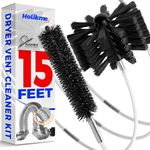
Brush Size and TypeThe brush size and type determine how well the kit can clean different vent sizes and shapes. Brushes come in various diameters, usually ranging from 2 to 4 inches, and can be made of nylon or synthetic bristles. Smaller brushes are better for narrow or flexible vents, while larger brushes are more effective for wide or rigid vents. Some brushes are designed to be flexible, making them easier to navigate around bends and corners. To choose the right brush, check the diameter of your vent and select a brush that fits snugly but can still move freely. If your vent has many bends, a flexible brush will make cleaning easier.
Drill CompatibilityDrill compatibility means whether the kit can be attached to a power drill for easier and more powerful cleaning. Some kits are designed to be used by hand, while others have an attachment that lets you connect the rod to a drill. Using a drill can make the cleaning process faster and more thorough, especially for long or dirty vents. If you have a power drill and want to save time, look for a kit that is drill-compatible. If you prefer manual cleaning or don't have a drill, a hand-operated kit will work just fine.
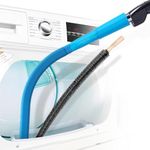
Rod Flexibility and DurabilityRod flexibility and durability refer to how easily the rods can bend around corners and how well they hold up over time. Flexible rods are important if your vent has multiple bends or turns, as they can navigate these without getting stuck. Durability is important because cleaning vents can put stress on the rods, especially if there is a lot of lint buildup. Look for rods made from sturdy materials like nylon or fiberglass, which offer a good balance of flexibility and strength. If your vent path is straight, flexibility is less important, but for complex vents, prioritize flexible and durable rods.
Ease of Assembly and UseEase of assembly and use describes how simple it is to put the kit together and operate it. Some kits have rods that snap together easily, while others may require screwing or twisting. The easier the kit is to assemble, the quicker you can get started and the less likely you are to make mistakes. If you are new to DIY projects or want a hassle-free experience, look for a kit with clear instructions and simple assembly. If you are comfortable with tools, you may not mind a kit that takes a bit more effort to put together.