Buying Guide for the Best computerized telescopes
Choosing a computerized telescope can be an exciting step for anyone interested in astronomy, whether you're a beginner or looking to upgrade your stargazing experience. Computerized telescopes, also known as GoTo telescopes, use motors and onboard computers to automatically locate and track celestial objects. When picking the right one, it's important to understand the main features and how they relate to your needs, such as ease of use, portability, and the types of objects you want to observe. By focusing on the key specifications, you can find a telescope that matches your interests and observing style.Aperture SizeAperture size refers to the diameter of the telescope's main lens or mirror, and it's one of the most important specs because it determines how much light the telescope can gather. More light means you can see fainter objects and more detail. Aperture sizes are usually measured in millimeters or inches. Small apertures (under 90mm/3.5 inches) are lightweight and portable, good for casual viewing of the moon and bright planets. Medium apertures (90-150mm/3.5-6 inches) offer a balance between portability and performance, letting you see more detail and some deep-sky objects. Large apertures (over 150mm/6 inches) are heavier but provide the best views of faint galaxies and nebulae. Choose an aperture based on what you want to observe and how much weight you're comfortable handling.
Mount TypeThe mount is the part of the telescope that supports it and allows it to move. For computerized telescopes, the most common types are alt-azimuth and equatorial mounts. Alt-azimuth mounts move up/down and left/right, making them simple to use and good for beginners. Equatorial mounts are designed to follow the rotation of the sky, which is helpful for tracking objects over time, especially if you want to try astrophotography. If you mainly want to observe and keep things simple, an alt-azimuth mount is a good choice. If you're interested in longer viewing sessions or photography, consider an equatorial mount.
Database SizeThe database size refers to how many celestial objects the telescope's computer can automatically find and track. Some telescopes have databases with a few thousand objects, while others can access tens of thousands. A larger database gives you more options, but for most users, a database with a few thousand objects is more than enough for years of exploration. If you have specific interests, like observing rare or faint objects, a larger database might be useful. Otherwise, focus on ease of use and the quality of the database rather than just the number.
Alignment MethodAlignment is the process of setting up your telescope so it knows where it is and can accurately point to objects. Some telescopes use manual alignment, where you point the telescope at known stars, while others offer automatic or assisted alignment using GPS or built-in cameras. Manual alignment can be quick once you learn it, but automatic alignment is more convenient, especially for beginners or if you want to spend less time setting up. Think about how much time and effort you want to spend on setup when choosing an alignment method.
PortabilityPortability is about how easy it is to move and set up your telescope. Smaller, lighter telescopes are easier to carry and set up, making them ideal if you plan to travel or observe from different locations. Larger telescopes can be heavy and bulky, but they offer better views. Consider where you'll be using your telescope most often—if you have a permanent spot, size may not matter as much, but if you need to transport it, look for a model that's easy to handle.
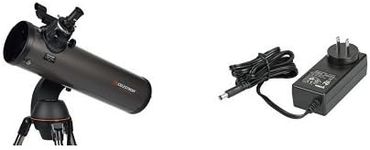
Power SourceComputerized telescopes need power to run their motors and computers. Some use internal batteries, while others require external power packs or AC adapters. Internal batteries are convenient for short sessions or travel, but may not last long. External power sources are better for longer sessions but require you to have access to power or carry extra equipment. Think about how and where you'll use your telescope to decide which power option fits your needs best.