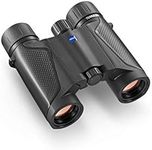
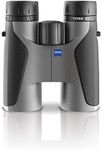
Buying Guide for the Best Compact Binoculars For Whale Watching
Choosing compact binoculars for whale watching is all about finding the right balance between portability, clarity, and comfort. Since you'll likely be outdoors and possibly on a moving boat, you want binoculars that are easy to carry, provide a clear and steady view, and are durable enough to handle the elements. Understanding the key specifications will help you make a choice that enhances your whale watching experience without being weighed down by unnecessary features.MagnificationMagnification refers to how much closer the binoculars make objects appear compared to the naked eye. For whale watching, a magnification of 7x to 10x is common. Lower magnification (around 7x) gives a wider field of view and is easier to keep steady, especially on a moving boat. Higher magnification (10x and above) brings whales closer but can make the image shakier and harder to follow. If you want a stable, easy-to-use view, especially if you’re new to binoculars or will be on a boat, stick to the lower end. If you’re on solid ground and want to see more detail, you might prefer higher magnification.
Objective Lens DiameterThe objective lens diameter is the size of the front lenses, usually measured in millimeters. This affects how much light the binoculars can gather, which impacts image brightness and clarity. Compact binoculars often have objective lenses between 20mm and 32mm. Smaller lenses (20-25mm) make the binoculars lighter and more portable, but they may not be as bright, especially in low light. Larger lenses (30-32mm) are a bit bulkier but provide a brighter image, which is helpful for spotting whales in cloudy or early morning conditions. Choose based on how much you value portability versus image brightness.
Field of ViewField of view is how wide an area you can see through the binoculars, usually described in feet at 1,000 yards or in degrees. A wider field of view makes it easier to spot and follow moving whales, especially when they surface unexpectedly. Compact binoculars can have a field of view ranging from about 250 to 400 feet at 1,000 yards. If you’re new to whale watching or want to easily track movement, look for a wider field of view. If you’re more interested in focusing on details, a narrower field may be acceptable.
Weight and SizeWeight and size determine how easy the binoculars are to carry and use for long periods. Compact binoculars are designed to be lightweight and small, making them ideal for travel and outdoor activities. Lighter models (under 1 pound) are easier to hold steady and won’t tire your arms, but may sacrifice some image quality or brightness. Slightly heavier models may offer better optics but can be less comfortable for extended use. Think about how long you’ll be using them and how much you’re willing to carry.
Waterproof and FogproofWaterproof and fogproof features protect your binoculars from moisture, rain, and sudden temperature changes, which are common during whale watching trips. Waterproof binoculars are sealed to prevent water from getting inside, while fogproof models are filled with gas to prevent internal fogging. If you’ll be near water or in changing weather, these features are important for keeping your view clear and your binoculars working well. If you only plan to use them in dry, stable conditions, you might not need these protections.
Eye ReliefEye relief is the distance you can hold the binoculars from your eyes and still see the full image. This is especially important if you wear glasses. Longer eye relief (15mm or more) makes binoculars more comfortable for glasses wearers, while shorter eye relief may be fine if you don’t wear glasses. Consider your own needs and comfort when checking this specification.