Buying Guide for the Best Chamber Vacuum Sealer
Choosing a chamber vacuum sealer can make a big difference in how you store food, prepare meals, or even handle sous vide cooking. Unlike regular vacuum sealers, chamber models are designed for heavy-duty use and can handle liquids and larger quantities with ease. To find the best fit for your needs, it's important to understand the main features and how they relate to your intended use. Think about how often you'll use the sealer, what types of food you'll be sealing, and the space you have available. By focusing on the key specifications, you can make a confident and informed choice.Chamber SizeChamber size refers to the internal dimensions of the vacuum sealer where you place your bags of food. This is important because it determines the maximum size of items you can seal at once. Smaller chambers are more compact and suitable for home use or sealing small portions, while larger chambers can handle bigger cuts of meat or multiple bags at once, making them ideal for bulk storage or commercial use. To pick the right chamber size, consider the largest item you plan to seal and how much space you have in your kitchen or workspace.
Seal Bar LengthThe seal bar is the part of the machine that creates the airtight seal on your vacuum bags. Its length limits the width of the bags you can use. Shorter seal bars are fine for small bags and everyday use, while longer seal bars allow you to seal larger bags or even multiple smaller bags at once. If you often seal large items or want to maximize efficiency, look for a longer seal bar. Match the seal bar length to the typical bag size you plan to use.
Vacuum Pump StrengthVacuum pump strength is usually measured in cubic meters per hour (m³/h) or similar units, and it indicates how quickly and powerfully the machine can remove air from the chamber. A stronger pump means faster sealing and a tighter vacuum, which is especially useful for sealing liquids or delicate foods. For occasional home use, a moderate pump strength is sufficient, but for frequent or commercial use, a more powerful pump will save time and provide better results.
Cycle TimeCycle time is the amount of time it takes to complete one vacuum and seal process. Shorter cycle times mean you can seal more bags in less time, which is important if you process large batches or use the machine in a business setting. For home use, a slightly longer cycle time may not be an issue, but if speed is important to you, look for a model with a faster cycle.
Ease of CleaningEase of cleaning refers to how simple it is to keep the chamber and other parts of the sealer clean. Some models have removable chambers or smooth surfaces that are easy to wipe down, while others may have more crevices or parts that are harder to reach. If you plan to seal liquids or messy foods, or if you’ll use the machine often, choosing a model that’s easy to clean will save you time and effort.
Control OptionsControl options include the types of settings and adjustments you can make on the machine, such as vacuum strength, sealing time, or custom programs. More advanced controls allow you to fine-tune the process for different foods, which is helpful if you seal a variety of items, including delicate or liquid-rich foods. If you want simplicity, basic controls may be enough, but if you like to experiment or need precision, look for a model with more adjustable settings.
Build Quality and DurabilityBuild quality and durability refer to the materials and construction of the vacuum sealer. Stainless steel bodies and high-quality components last longer and withstand frequent use, while plastic models may be lighter but less durable. If you plan to use the sealer often or in a demanding environment, prioritize a sturdy, well-built machine. For occasional use, a lighter model may be sufficient.




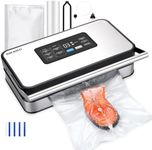
![[2023 New] Wevac 10 inch Chamber Va](https://images-proxy.bestreviews.guide/BXD5rLvNxpSVOcD-YZxuMUUiAyc=/0x150/https://m.media-amazon.com/images/I/41Ml3lU2iCL._AC_CX679_.jpg)