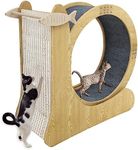
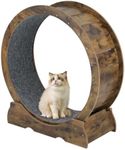
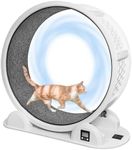
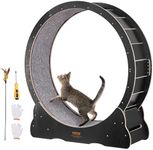
Buying Guide for the Best Cat Exercise Wheel
Choosing a cat exercise wheel can be a great way to help your indoor cat stay active, healthy, and entertained. Since cats have different personalities, sizes, and energy levels, it's important to pick a wheel that matches your cat's needs and your living space. When shopping, focus on the wheel's size, build quality, safety features, and ease of use. Understanding the key specifications will help you make a choice that keeps your cat happy and safe.Wheel DiameterWheel diameter refers to how large the wheel is from one edge to the other. This is important because a wheel that's too small can be uncomfortable or even unsafe for your cat, especially if your cat is large or long. Generally, smaller wheels (under 36 inches) are suitable for kittens or small breeds, while medium wheels (36-43 inches) fit most average adult cats. Larger wheels (over 43 inches) are best for big cats or multi-cat households. To pick the right size, consider your cat's length and weight—your cat should be able to run with a straight back without crouching.
Weight CapacityWeight capacity tells you the maximum weight the wheel can safely support. This is crucial for safety, as a wheel that can't handle your cat's weight may break or tip over. Wheels with lower weight limits (up to 10 pounds) are fine for kittens and small cats, while those with higher limits (10-20 pounds or more) are better for larger or multiple cats. Always check your cat's weight and choose a wheel that can support a bit more than that for extra safety.
Material and Build QualityThe material and build quality determine how sturdy, durable, and safe the wheel is. Common materials include plastic, wood, and metal. Plastic wheels are lightweight and easy to move but may not be as durable for heavy or active cats. Wooden or metal wheels are sturdier and last longer but can be heavier and more expensive. Look for smooth edges and a solid base to prevent injuries. If your cat is very active or you have multiple cats, a sturdier build is a better choice.
Running SurfaceThe running surface is the part your cat's paws touch while running. It should be non-slip and comfortable to prevent injuries. Some wheels have carpet, EVA foam, or textured plastic surfaces. Carpeted or foam surfaces are softer and quieter, which is good for sensitive cats or quiet homes. Textured plastic is easier to clean but may be less comfortable. If your cat has sensitive paws or you want a quieter wheel, choose a softer surface. For easy cleaning, a plastic surface might be better.
Noise LevelNoise level refers to how much sound the wheel makes when in use. This matters if you live in an apartment, have a nervous cat, or want to use the wheel at night. Quieter wheels use better bearings and softer materials, while louder wheels may squeak or rattle. If you or your cat are sensitive to noise, look for wheels advertised as quiet or with customer reviews mentioning low noise.
Safety FeaturesSafety features include things like stable bases, enclosed sides, and smooth edges. These prevent the wheel from tipping over, your cat from falling out, or getting hurt. Some wheels have partial enclosures or guards to keep your cat safe while running. If your cat is very playful or you have children or other pets, extra safety features are a good idea.
Ease of CleaningEase of cleaning is about how simple it is to keep the wheel hygienic. Cats shed fur and may have accidents, so a wheel that's easy to wipe down or has removable surfaces is helpful. Wheels with smooth, water-resistant surfaces are easier to clean, while those with carpet may need more maintenance. If you want less hassle, look for a wheel with removable or washable parts.