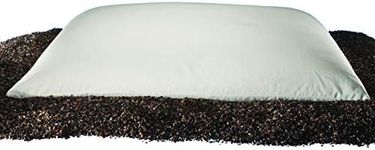
Buying Guide for the Best Buckwheat Pillows
Choosing a buckwheat pillow can be a great decision if you’re looking for natural support and breathability in your sleep. Buckwheat pillows are filled with hulls from buckwheat seeds, which allow them to conform to your head and neck while providing good airflow. When picking the right buckwheat pillow, it’s important to consider how you sleep, your comfort preferences, and any sensitivities you might have. Understanding the key features will help you find a pillow that supports your sleep style and keeps you comfortable throughout the night.Fill AmountThe fill amount refers to how many buckwheat hulls are inside the pillow. This is important because it affects the pillow’s firmness and height. A pillow with more fill will be firmer and higher, which can be good for side sleepers who need more support. Less fill makes the pillow softer and lower, which may suit stomach or back sleepers. Many buckwheat pillows have zippers so you can add or remove hulls to adjust the loft. Think about your usual sleeping position and whether you like a higher or lower pillow, and choose a fill amount that matches your comfort needs.
Pillow SizeBuckwheat pillows come in various sizes, such as standard, queen, king, and even smaller travel sizes. The size is important because it determines how much space you have to move around and how well the pillow fits your bed. Standard sizes are good for most people and fit regular pillowcases, while larger sizes offer more room if you move a lot during sleep. Smaller sizes are portable and can be used for travel or as support for specific body parts. Consider your bed size, how much you move at night, and whether you want a pillow just for your head or for other uses.
Hull QualityThe quality of the buckwheat hulls inside the pillow affects its comfort, durability, and noise level. High-quality hulls are clean, intact, and free from dust or debris, making the pillow more comfortable and less likely to cause allergies. Lower-quality hulls may break down faster, create more noise, or have an unpleasant smell. When choosing a pillow, look for information about how the hulls are processed and whether they are organic or dust-free. If you have allergies or sensitivities, prioritize pillows with well-cleaned, high-quality hulls.
Pillow Cover MaterialThe cover material is what you feel against your skin and it also affects the pillow’s breathability and durability. Common materials include cotton, organic cotton, and sometimes blends with other natural fibers. A good cover should be soft, breathable, and strong enough to hold the hulls without tearing. If you have sensitive skin or prefer natural materials, look for organic cotton covers. Also, check if the cover is removable and washable, which makes it easier to keep your pillow clean.
AdjustabilityAdjustability means whether you can add or remove buckwheat hulls to change the pillow’s height and firmness. This is important because everyone’s comfort needs are different, and being able to adjust the pillow lets you customize it for your sleeping style. Most buckwheat pillows have a zipper for this purpose. If you’re not sure what loft or firmness you need, or if your preferences might change, choose a pillow that allows you to adjust the fill easily.
Noise LevelBuckwheat hulls can make a rustling sound when you move your head on the pillow. Some people find this soothing, while others may find it distracting. The noise level depends on the quality and dryness of the hulls, as well as the thickness of the cover. If you’re a light sleeper or sensitive to noise, look for pillows with thicker covers or specially processed hulls that are quieter. If possible, read reviews or try the pillow to see if the sound is comfortable for you.