Buying Guide for the Best Battery Spot Welder
Choosing a battery spot welder can feel overwhelming, but understanding the key features will help you find the right tool for your needs. A battery spot welder is used to join metal pieces, often for battery packs or small metalwork projects. The right choice depends on the type of work you plan to do, the thickness of the materials, and how often you’ll use the welder. By focusing on the main specifications, you can make a confident decision that matches your projects and skill level.Welding CurrentWelding current refers to the amount of electrical current the spot welder can deliver during operation. This is important because it determines how effectively the welder can join metal pieces, especially thicker or more conductive materials. Lower current (around 100-300A) is suitable for thin materials like small battery tabs, while higher current (400A and above) is needed for thicker metals or more demanding jobs. To pick the right current, consider the thickness and type of metal you’ll be welding most often. If you’re mainly working with small battery tabs, a lower current is sufficient, but for larger or more frequent projects, a higher current will give you better results.
Pulse SettingsPulse settings control how long and how many times the welder delivers current in quick bursts. This is important because it affects the quality and strength of the weld, as well as the risk of damaging delicate materials. Basic welders may have a single pulse, while more advanced models offer adjustable or multiple pulse options. Single pulse is fine for simple jobs, but adjustable or double pulse settings are better for precise work or when working with different materials. If you need flexibility or plan to weld a variety of metals, look for a welder with adjustable pulse settings.
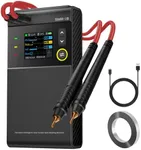
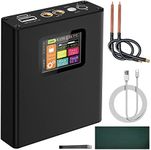
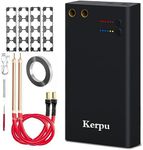
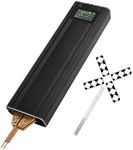
Electrode Type and SizeThe electrodes are the parts of the welder that actually touch the metal and deliver the current. Their type and size affect the quality of the weld and how easy it is to work with different materials. Thinner electrodes are good for fine, detailed work, while thicker ones handle larger jobs and higher currents. Some welders allow you to change electrodes, which is useful if you plan to work on different types of projects. Choose a welder with electrodes that match the size and type of metal you’ll be welding most often.
Portability and SizePortability refers to how easy it is to move and use the spot welder. Smaller, lighter welders are easier to carry and store, making them ideal for home use or occasional projects. Larger, heavier models may offer more power but are less convenient to move around. If you need to take your welder to different locations or have limited workspace, a compact and portable model is a better fit. For stationary work in a workshop, size is less of a concern.
Battery Type and CapacityThe battery type and capacity determine how long the welder can operate before needing a recharge. Most battery spot welders use lithium-ion batteries, which are lightweight and hold a good charge. Higher capacity batteries (measured in mAh or Ah) allow for more welds per charge, which is important if you have larger projects or need to work for longer periods without interruption. If you plan to use the welder frequently or for big jobs, look for a model with a higher battery capacity.
Safety FeaturesSafety features help protect both you and the welder from accidents or damage. Common features include overcurrent protection, temperature sensors, and automatic shutoff. These are important because spot welding involves high currents and heat, which can be dangerous if not properly managed. If you’re new to spot welding or want extra peace of mind, choose a welder with built-in safety features.