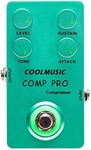
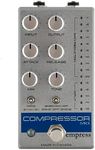
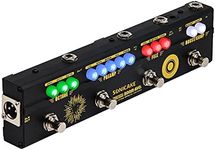
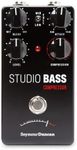
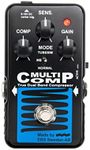
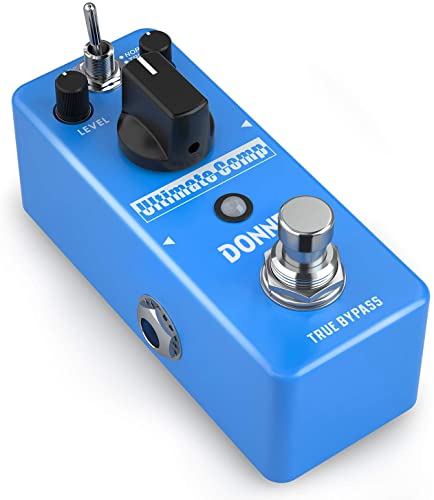
Buying Guide for the Best Bass Compressor Pedals
Choosing the right bass compressor pedal can make a big difference in your sound and playing experience. A compressor pedal helps even out the volume of your bass notes, making quiet notes louder and loud notes softer, which results in a more consistent and polished tone. When shopping for a bass compressor pedal, it's important to understand the key features and how they relate to your playing style and needs. By focusing on the main specifications, you can find a pedal that enhances your sound without making things too complicated.Compression RatioThe compression ratio determines how much the pedal reduces the volume of loud signals. A lower ratio (like 2:1) means gentle compression, which is good for subtle smoothing, while a higher ratio (like 10:1 or more) gives a more noticeable effect, often used for special effects or very dynamic playing. If you want your playing to sound natural and just a bit more controlled, go for a lower ratio. If you need to tame wild volume spikes or want a more obvious compressed sound, a higher ratio might suit you better.
ThresholdThe threshold sets the level at which the compressor starts to work. If you set it low, the pedal will compress almost everything you play, while a higher threshold means only the loudest notes get compressed. If you play with a lot of dynamics and want to keep some of that natural variation, a higher threshold is better. If you want a very even sound, a lower threshold will help achieve that.
Attack and ReleaseAttack controls how quickly the compressor responds to your playing, and release controls how quickly it stops compressing after the note fades. Fast attack times can smooth out sharp peaks but may reduce punch, while slower attack times let the initial hit of the note come through. Release time affects how natural or artificial the compression feels. If you want to keep the punch and character of your playing, look for a pedal with adjustable attack and release, and experiment to find what feels best for your style.
Controls and SimplicitySome compressor pedals have just a couple of knobs, while others offer more detailed control. Simple pedals are easier to use and great for beginners or those who want to set and forget. More complex pedals let you fine-tune your sound but can be overwhelming if you're new to compression. Think about how much control you want and how comfortable you are with tweaking settings.
Transparency and Tone ColoringSome compressors are designed to be very transparent, meaning they don't change your bass's natural tone much, while others add their own character or 'color' to the sound. If you love your bass's natural tone and just want more consistency, look for a transparent compressor. If you want to add a bit of warmth or character, a pedal known for its tone coloring might be a better fit.
Size and Power RequirementsCompressor pedals come in different sizes, from compact to larger units, and may require different types of power (battery or adapter). If you have limited space on your pedalboard or need something portable, a smaller pedal is ideal. Make sure the power requirements match your setup to avoid compatibility issues.
Noise LevelAll compressors can add a bit of noise, especially at higher settings. Some pedals are designed to be very quiet, which is important if you play in quiet settings or record often. If you need a clean sound, look for pedals that are known for low noise performance.